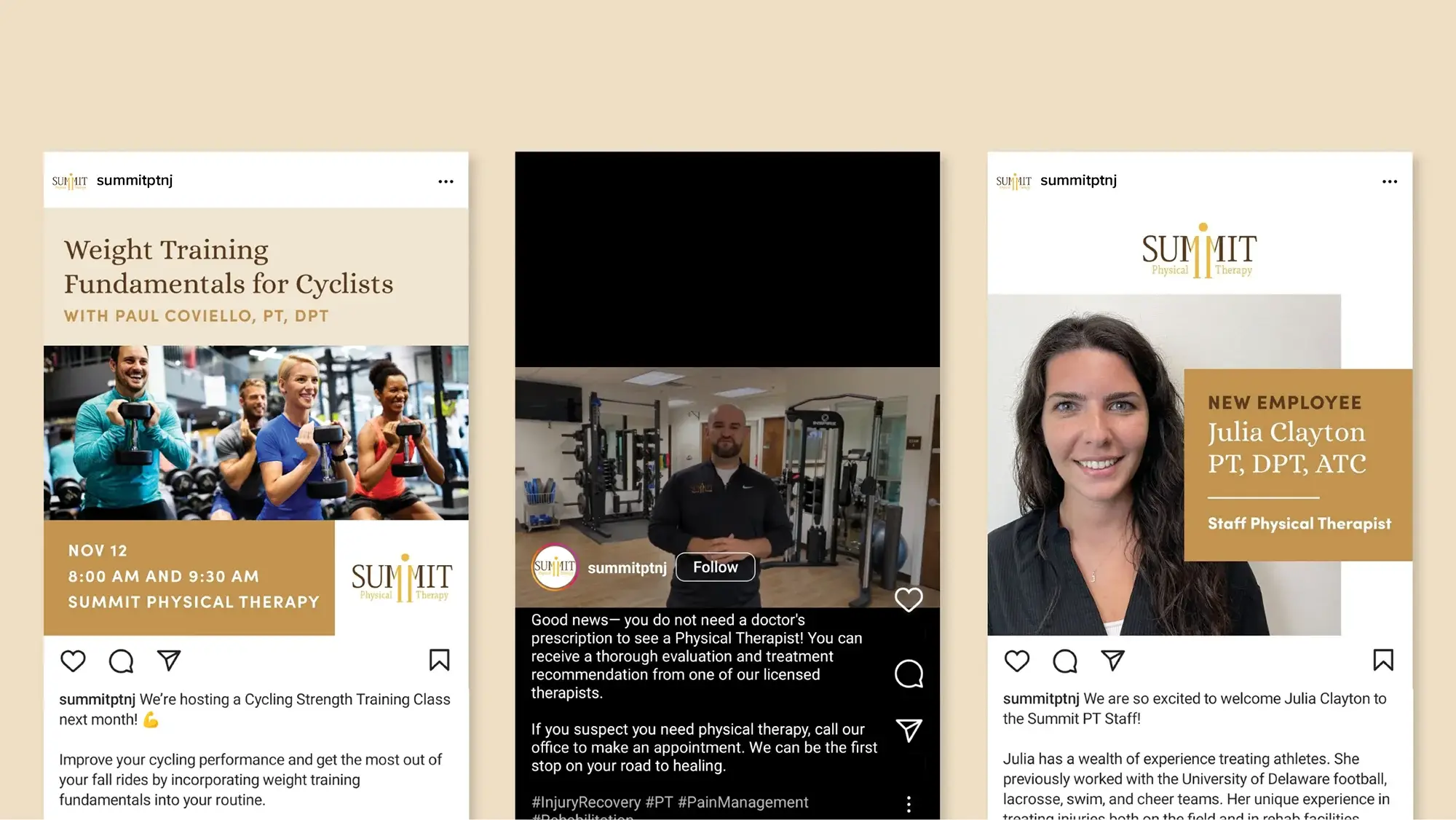
Creating an ad campaign that delivers the right message to the right audience is often one of a company’s biggest challenges. Having a firm grasp on your brand, understanding who your target customer is, and creating a message that will attract them is only the beginning! In today’s marketing environment, advertising is predominantly digital, which carries its own array of platforms, parameters and metrics, many of which change at lightning speed.
It is vital to understand how a message appears on platforms, where consumers see your ads, how to measure what is working, and what to adjust to capitalize on success. Ongoing monitoring, testing, and strategic optimization are essential to maximize performance and ensure long-term campaign success.
With those fundamentals in mind, the next step is breaking down the core elements that shape a successful campaign.
What is the Goal of Your Ad Campaign?
The more clearly defined your goal is, the more successfully tailored your content can be. Is your goal to drive sales? Increase brand awareness? Your campaign may even have successive goals, for example, beginning with ads that introduce your organization and its brand, then focusing on relaying a specific value proposition, and then finally driving a conversion, like product sales or registering for a webinar.
Defining a Digital Ad Campaign’s Success
Before launching, it’s important to define what success looks like:
- Identify your campaign objective (awareness, engagement, conversions, lead generation, etc.)
- Understand the platform-specific metrics that align with that objective
- Use these metrics to evaluate performance and guide optimization
- Have industry benchmarks and defined KPI’s to meet
- Once campaigns have run for at least 3-6 months, use your own ad performance metrics to generate benchmarks
Creating Powerful Ad Content
As you create the ad content, determine specifically what you want your audience to feel after seeing your ad. Excited to purchase a theater ticket? Curious about strength testing at your gym? Inspired to finally upgrade their home appliances? Identify the single main idea you want to communicate that will shift how your audience thinks or behaves. When you narrow your campaign to one emotional goal and one core message, it becomes much easier to create aligned, consistent content.

For this HVAC company, we targeted homeowners who might be ready for an upgrade by calling attention to old furnaces and boilers.
Who is the Target Audience for the Campaign?
Basic demographics are the first step in defining your target audience, but it’s important to go beyond this. You should have a clear understanding of your audience’s behaviors, interests, and how they interact with your chosen platforms. In digital advertising, precision drives performance; clearly defining your audience enables smarter targeting, stronger messaging alignment, and more impactful campaign results.
Where Does Your Audience Spend Their Time Online?
Is your audience on TikTok? Are they Facebook users? Carefully consider what platforms they frequent and how they may interact with your brand. How do prospective customers find you? Will they be searching for your services on Google, or will they need to be served an ad on Instagram to introduce them to your product or service? Here is a brief guide to some commonly used advertising platforms and their fit for your advertising goals.
- Google Ads – Best for capturing high-intent demand: Service-based businesses, e-commerce with searchable products, and ads focused on lead generation or direct response.
- Meta (Facebook and Instagram) – Best for ads focused on awareness, engagement, and conversion: consumer brands (B2C), e-commerce, performing arts venues, and consumer brands, and for building communities or long-term customer relationships.
- YouTube – Best for ads that tell stories at scale: strong visual or educational content, product launches and video marketing.
- TikTok – Best for ads that incorporate culture, creativity, and authenticity: consumer and lifestyle brands, ads targeting Gen Z and Millennials, or campaigns integrating influencer marketing and user-generated content into their strategy.
- LinkedIn – Best for B2B and professional services: B2B companies, SaaS, consulting, enterprise services, and recruiting.
- Amazon Advertising – Best for ads that capture buyers at the point of purchase: e-commerce on Amazon, consumer packaged goods (CPG), and brands focused on sales velocity and product visibility.
Creating Digital Ads with Platform Fluency in Mind
Once you’ve decided which platforms to leverage, you’ll need to tailor the content to each one. Every advertising platform has its own specifications, best practices, and ad formats. Being familiar with these details, whether it’s LinkedIn, Meta, Google, or others, ensures your creative performs optimally and meets technical requirements. This is where you need a true understanding of the platform you are using, including campaign objectives you can set within each platform and which metrics you can use to define campaign success.
Knowing what character counts to use for post copy and what pixel sizes to use for images is just the beginning; there are many ever-changing rules and guidelines around both format and subject matter to consider when developing creative for each platform.
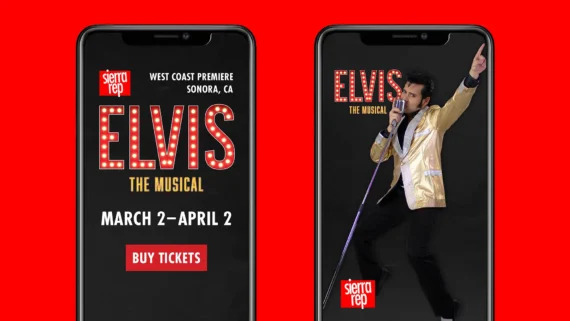
Trillion’s campaigns for Sierra Repertory Theatre utilize Meta, where production photos and videos easily transmit their brand of polished, entertaining shows.
Key Technical Elements for High-Performing Digital Ads
One of the big benefits of digital advertising is the ability to get highly specific when targeting your audience, increasing the chance of conversions. This is a dynamic process; optimizing means continuously following the performance of the ads and then adjusting your creative, budget, and other parameters according to what is working. Some examples could be switching platforms, changing creative from static to video, or refreshing your ad copy to better match top-performing target keywords.
Several behind-the-scenes elements are essential:
- Conversion tracking: Ensure this is set up to measure results accurately.
- UTMs and analytics tagging: Track traffic sources and campaign impact,
Landing pages: The page your ads drive to on your website needs to be optimized, particularly for mobile. Make sure the page is fast, functional, and tailored to the campaign’s audience.
Refreshing the Creative Strategy
You should expect to learn as the ads are running. With any campaign, having highly original content and multiple ad variations live at once can offer useful insight into what is the most relevant and engaging for your particular audience.
Testing and iteration are essential; what works for one audience or message may not work for another. What worked six months ago may not have the same effect going forward; flexibility and experimentation will yield the best direction.
Campaign Budget Considerations
Budget planning should ensure sufficient scale for meaningful results. Consider a daily or campaign-level budget to achieve adequate reach.
Most major ad platforms start with a learning phase after a campaign launches, where the algorithm assesses how best to serve your ads to your audience, and then optimizes as the campaign progresses. Make sure your budget allocation supports both the learning and optimization cycles.
How Long Should an Ad Campaign Run?
It all depends on what you’re trying to achieve, and of course, your budget. Are you running a brand awareness campaign? A limited-time offer with a significant discount on services? And most importantly, how large is your audience?
The smaller your target audience, the more frequently your ads are served to the same people. In those cases, you want to be careful not to fatigue your audience, which means refreshing your creative more often than you would for a larger audience.
For smaller audiences, refreshing every three weeks can work well. With larger audiences, you can often stretch that to four or even five weeks. Even within shorter refresh cycles, you’re likely running multiple ad variations that the algorithm is rotating and optimizing. A general rule of thumb is at least monthly refreshes, but adjust based on observed performance.
Trillion Creates Successful Digital Ad Campaigns
At Trillion, our team combines creative thinking with comprehensive strategies and consistent refinement that span the life of the campaign. Our successful campaigns across a range of budgets have increased brand awareness, sales, and engagement. We’d love to see how we could help your organization! Call us at 908.219.4703 or reach out on our website to see how we can launch your next campaign.