Creating a Website That Drives Real Results
Your website is where first impressions form, credibility is established, and visitors decide whether to engage or leave. For nonprofits, it’s where donors assess trustworthiness. For schools, it’s where families evaluate fit. For arts organizations, it’s where patrons discover programming. For businesses, it’s where leads convert.
Yet many organizations approach redesigns primarily from an aesthetic perspective. They want something modern, something their board will approve. These considerations matter, but they’re insufficient.
Truly effective websites blend design with user experience, content strategy, technical performance, and clear conversion paths. The gap between good-looking and effective is substantial. One wins awards but struggles to convert. The other consistently drives the actions that matter: donations, enrollments, ticket sales, inquiries, and applications.
The best websites emerge from strategic thinking that happens before design begins. They’re built on research about who visits, what they need, and how to guide them efficiently toward engagement.
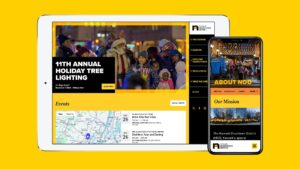
As a vast resource for those visiting, working in, or living in downtown Newark, the Newark Downtown District site needed its content to be presented in an organized, engaging, and user-friendly manner to serve the needs of a wide audience.
Understanding Website Audiences and User Journeys
Effective websites begin with clarity about who you’re serving and what they’re trying to accomplish. Most organizations serve multiple audiences with different needs and motivations.
A nonprofit serves donors, volunteers, program participants, and staff. A school serves prospective families, current families, alumni, and faculty. An arts organization balances patrons, artists, donors, and partners. Each audience arrives with different questions and goals.
Mapping User Needs
User profiles help you map these differences strategically. A monthly donor has different needs than a first-time visitor trying to understand your mission. A parent researching schools approaches your site differently than a current parent seeking the tuition payment schedule.
Journey mapping plots the path each audience takes from awareness through engagement:
- What brings someone to your site?
- What questions need answering?
- What concerns must be addressed?
- What friction points might cause them to leave?
- Where do you want them to go?
This research phase is where effective website development processes begin. Discovery work that uncovers audience needs, organizational goals, and competitive context creates the foundation for strategic decisions. Skipping this phase means designing based on assumptions rather than insights.
Building Website Architecture for Clarity and Conversion
Architecture is the invisible foundation that makes websites intuitive or frustrating. Poor architecture creates constant friction. Good architecture creates a positive user experience, leading to more conversions.
Priority-Based Structure
Creating effective architecture starts with understanding priority pathways. What are the most common tasks visitors need to accomplish? Which conversion actions matter most? It’s important to determine your site’s priorities before your first design meeting to inform structural decisions about navigation, content organization, and visual hierarchy.
Navigation should reflect how users think about your organization, not how you’re structured internally. A school might organize by admission status rather than grade divisions. A nonprofit might organize by problems solved rather than by internal departments.

For KBR Law Firm’s award-winning website, Trillion utilized meticulous taxonomy planning and design to feature 130 attorney bio pages, a vast array of services and law practice areas, and articles and resources displayed throughout the website.
Reducing Friction
Every additional click required, every confusing label, every unclear next step causes some percentage of visitors to abandon their task. Minimizing friction through thoughtful architecture compounds into significantly better performance.
Site structure also influences search performance. Search engines favor sites with clear hierarchies, logical groupings, and effective internal linking.
Creating Brand-Driven Visual Experiences
Visual design establishes credibility and creates an emotional connection. In seconds, design signals whether an organization is trustworthy and worth engaging with deeper.
Core Design Elements
Brand identity should permeate the digital experience without overwhelming content. Messaging, colors, typography, photography, and layout should all reflect brand personality while serving functional purposes.
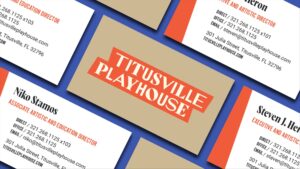
For Titusville Playhouse, Trillion improved the overall design aesthetic of the website and brand, presented content on the website in new ways to inspire ticket sales, and streamlined the website’s administrative tasks.
Visual storytelling builds trust through authentic representation. Photography showing real people and real moments creates a connection that stock imagery cannot. For mission-driven organizations, showing impact through visual evidence matters more than polished perfection.
Typography affects readability and hierarchy while conveying personality. Clear hierarchies guide scanning, appropriate sizing ensures readability across devices, and sufficient contrast maintains accessibility.
Color creates visual interest and reinforces brand while serving functional purposes. Consistent color use helps visitors understand relationships between elements. Strategic application draws attention to conversion actions.
Organizations that have earned recognition for thoughtful design demonstrate how brand-driven visual experiences elevate digital presence while maintaining clarity and usability.
Crafting Website Content That Converts
Design provides the container, but content drives engagement. Effective websites balance compelling messaging with practical information.
Essential Content Elements
Homepage content should immediately communicate three things: what you do, why it matters, and what visitors should do next. Clarity trumps cleverness.
Service or program pages should answer the questions visitors actually ask:
- What does this program do?
- Who is it for?
- What results can they expect?
- What does it cost?
- How do they participate?
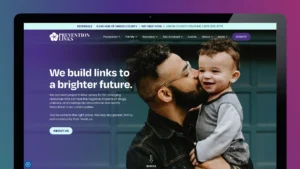
For Prevention Links, Trillion’s website redesign streamlined its information and resources so that the varied visitors to the site could easily access the help they needed.
Case studies and portfolios demonstrate capability, provide concrete evidence of results, and build confidence in your expertise. For professional service firms, strategic content marketing through case studies often drives more conversions than any other content type.
Calls-to-action should be specific and contextual. “Support our work” is vague; “Sponsor a scholarship” is concrete. “Learn more” is passive; “Schedule your visit” is active.
For organizations relying on ongoing content, developing a content marketing strategy transforms websites from static brochures into dynamic engagement tools.
Ensuring Website Accessibility and Mobile Performance
Accessibility isn’t optional. It’s an ethical imperative, often a legal requirement, and increasingly a ranking factor for search.
Accessibility Requirements
ADA compliance covers multiple dimensions:
- Visual accessibility: Sufficient color contrast, resizable text, alternatives for color-coded information
- Navigation accessibility: Keyboard operability and screen reader compatibility
- Content accessibility: Descriptive link text, image alt attributes, logical heading structures
For mission-driven organizations, accessibility takes on added weight. Websites that fail accessibility standards contradict inclusive values and exclude the audiences they aim to serve.
Mobile-First Design
Mobile traffic typically accounts for 50-70% of website visits. Mobile-first design ensures experiences work beautifully on small screens rather than forcing desktop designs into mobile constraints.
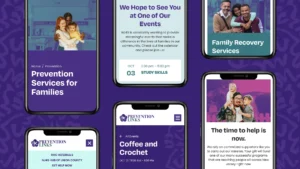
All of Trillion’s website designs work seamlessly on mobile devices.
This means reconsidering patterns that don’t translate well:
- Hover interactions that don’t exist on touch devices
- Tiny tap targets difficult to hit with fingers
- Content hierarchies that overwhelm small screens
Performance matters, especially on mobile, where connections are often slower, and user expectations are higher. Google prioritizes fast, mobile-friendly experiences in its search rankings, meaning sites that load quickly and perform well on mobile devices are more likely to appear higher in search results. Optimizing for mobile performance not only improves visibility and usability on phones but also often enhances desktop performance.
Optimizing Websites for Specific Organizational Goals
Different organizations need different conversion capabilities. Effective websites are optimized for their specific goals.
Nonprofit Fundraising
Donation forms need to be simple, secure, and offer appropriate giving options. Current trends in nonprofit website design emphasize storytelling that connects giving to impact, simplified donation processes, and mobile optimization.
School Enrollment
Enrollment funnels guide families from interest through application. This includes separate paths for different admission types, clear information about tuition and financial aid, virtual tour capabilities, and application portals.
Arts Organization Ticketing
Ticketing integration should feel native rather than jarring hand-offs to third-party systems. Theater websites specifically benefit from design that conveys the energy of live performance while maintaining practical functionality.
Professional Services Lead Generation
Lead generation happens through contact forms, consultation requests, resource downloads, and newsletter signups. Sites should establish credibility through case studies, credentials, and thought leadership content.
Designing Effective E-Commerce Websites That Convert and Scale
For organizations that sell products, memberships, registrations, or digital goods, e-commerce functionality transforms a website from a communications tool into a revenue engine. An effective e-commerce website must balance brand storytelling with frictionless purchasing, because even small points of confusion can directly impact sales.
Clarity and Confidence Drive Online Purchases
Visitors need to feel confident before they buy. Clear product descriptions, transparent pricing, shipping or fulfillment details, and easy-to-find policies reduce hesitation. Strong photography, concise benefits-driven copy, and social proof, such as testimonials or reviews, all help establish trust.
Streamlined User Journeys
E-commerce success depends on minimizing steps between interest and purchase. Navigation should make it easy to browse categories, filter options, and compare products. Checkout flows should be fast, intuitive, and distraction-free, with guest checkout options and multiple payment methods available. Every additional field or unexpected step increases the risk of abandonment.
Brand Experience Still Matters
E-commerce websites shouldn’t feel transactional or generic. Brand personality should be woven into the experience through visual design, tone of voice, and storytelling.
Mobile and Performance Are Non-Negotiable
A significant portion of e-commerce traffic happens on mobile devices. Product browsing, cart management, and checkout must work seamlessly on small screens. Page speed is especially critical; slow-loading product pages or checkout delays can cost real revenue.
Scalability and Integration
Effective e-commerce platforms are built to grow. Inventory management, CRM integration, email marketing, analytics, and fulfillment systems should work together seamlessly. Choosing the proper technical foundation ensures your website can support promotions, seasonal demand, and future expansion without costly rebuilds.
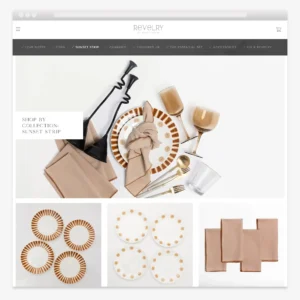
Trillion created a beautifully branded e-commerce site for a high-end tableware retailer, featuring WooCommerce integration, influencer affiliate tools, warehouse fulfillment, location-based shipping and taxes, and a seamless branded checkout.
Driving Quality Traffic Through Search and Content
Building an effective website only matters if the right people visit. Several foundational elements influence visibility and traffic quality.
Search Optimization Foundations
Search optimization begins with technical foundations: fast loading speeds, mobile responsiveness, secure connections, and clean code. Search engines favor sites that provide good user experiences.
Content strategy affects search visibility significantly. Regular publishing signals activity. Topic clusters build topical authority. Adapting content for search AI becomes increasingly crucial as AI-powered search transforms discovery.
Strategic Visibility
The goal isn’t just traffic volume but traffic quality. Visitors who arrive with relevant needs are far more valuable than random visitors who immediately bounce. Strategic visibility focuses on attracting the right audiences.
Measuring and Improving Website Performance
Website performance encompasses both technical speed and mission effectiveness. Both require ongoing attention and testing to evaluate usability.
Technical Performance
Page speed determines whether visitors wait for content or abandon immediately. Simple tests can evaluate performance and identify opportunities for improvement.
Common issues include oversized images, excessive scripts, unoptimized code, and slow server response times. Many are addressable through image compression, code minification, and caching strategies.
Mission Effectiveness
Mission effectiveness requires tracking behaviors that indicate engagement and conversion:
- Nonprofits: Donation completions, volunteer signups, program inquiries
- Schools: Inquiry forms, tour requests, and application dates
- Arts organizations: Ticket sales, event registrations
- Businesses: Contact submissions, consultation requests, and content downloads
Analytics reveal how visitors move through your site, where they enter and exit, which content resonates, and where friction occurs. User feedback through surveys and testing reveals problems analytics miss.
Website performance isn’t a launch milestone but an ongoing commitment. Continuous optimization ensures your site improves over time.
Choosing the Right Website Development Partner
The complexity of effective websites exceeds what most organizations can build internally or through fragmented vendor relationships. Exceptional websites require integrated expertise across strategy, design, content, development, and optimization.
Why Fragmented Approaches Fail
When different vendors handle strategy, design, content, and development, coordination gaps create inconsistency. Designers create layouts developers can’t build. Strategists recommend features that content creators can’t support. No single party owns the holistic outcome.
Website template solutions offer speed and cost efficiency but limit differentiation and optimization. They constrain you to predetermined structures and force your content into patterns designed for different needs.
Freelancers offer specialized skills but rarely provide comprehensive capabilities. Coordinating multiple freelancers recreates the fragmentation problem while adding project management burden.
What Organizations Really Need
Organizations need integrated partners who provide strategic thinking, creative excellence, technical capability, and ongoing support. Understanding what to include in a website RFP helps evaluate whether potential partners can deliver comprehensively.
The right partner brings experience from projects like yours. They understand your sector’s dynamics, your audience’s expectations, and the specific challenges you face. They ask difficult questions about goals and success metrics before discussing design preferences.
Work With a Strategic Website Design and Development Partner
Trillion has designed and developed websites for nonprofits, schools, arts organizations, and professional services firms. We understand what makes websites effective because we’ve built hundreds that consistently drive results.
Strategic foundation. We start with discovery and strategy before design. Our website development process emphasizes understanding your audiences, goals, and competitive landscape.
Integrated expertise. You work with one team that owns the entire outcome across strategy, design, content, and development. This ensures consistency, efficiency, and accountability.
Mission-driven experience. We’ve worked with nonprofits transforming donor communication, schools reimagining family attraction, theaters enhancing patron engagement, and professional firms establishing thought leadership. Our portfolio includes award-winning work that blends strategy with creative excellence.
Performance focus. Our sites load quickly, function seamlessly across devices, meet accessibility standards, and optimize for search visibility. More importantly, they guide visitors toward meaningful engagement with minimal friction.
Ongoing partnership. Launching a website is the beginning, not the end. We help you optimize continuously as your organization evolves, audience needs shift, and technology advances.
Ready to create a website that drives meaningful results? Learn about Trillion’s comprehensive web design services, or contact us now to explore your vision, align on your website’s needs, and shape a site that works as hard as your organization does.