 The Tech Interactive End of Year Appeal




Annual reports and fundraising collateral are not just recap materials. They are mission-critical communication tools that help nonprofits earn trust, reinforce credibility, and sustain donor momentum. When these pieces are planned strategically, they do more than share information. They make supporters feel connected to outcomes, confident in leadership, and motivated to continue giving.
What Makes an Annual Report Donors Actually Read?
The reports that hold attention lead with impact, not administration. They open on a human story and a few clear outcomes, use infographics and real photography instead of dense financial tables, and keep the financials transparent but simple. The strongest ones are built in two formats at once: a high-end printed piece for major donors and board members, and a mobile-friendly digital version with donation links built in. In short, design the report around what a supporter wants to feel and do, not around what the organization needs to file.
The most effective nonprofit marketing teams treat annual reports, appeals, and campaign collateral as a connected system. The annual report strengthens donor confidence, appeal materials convert that trust into action, and supporting assets like email, event design, and direct mail keep the message consistent across every channel. This guide lays out how to build that system with strong content planning, clear storytelling, and design that makes impact easy to understand.
Why Annual Reports Are Evolving Into Impact Reports That Support Fundraising
Many nonprofits are shifting away from traditional annual reports and embracing the reality that annual reports are transforming into impact reports. Instead of functioning as compliance-style documents, modern reports are designed to show outcomes, reinforce accountability, and strengthen donor relationships.
This shift is not just a trend in messaging. It is a practical response to how donors consume information. Supporters want clarity, results, and proof that the organization is producing meaningful change. The stakes behind that proof keep rising. U.S. charitable giving reached a record $617.2 billion in 2025, up 5.7 percent over the prior year and 3.0 percent after inflation, so every organization is competing harder to show donors exactly what their support made possible. Report formats have evolved as well, and exploring new annual report design formats can help nonprofits choose an approach that fits their audience, budget, and distribution goals. Some organizations benefit from a print-first report that feels tangible and keepsake-worthy, while others benefit from a more modular approach that supports year-round donor engagement.
When choosing to make annual reports available online, simply uploading a standard PDF is no longer enough. To ensure document compliance, digital reports must be fully optimized for ADA and WCAG (Web Content Accessibility Guidelines) compliance so that screen readers used by visually impaired donors can navigate them seamlessly.
The most effective annual and impact reports tell a coherent story, make data understandable, and invites donors into the next chapter.
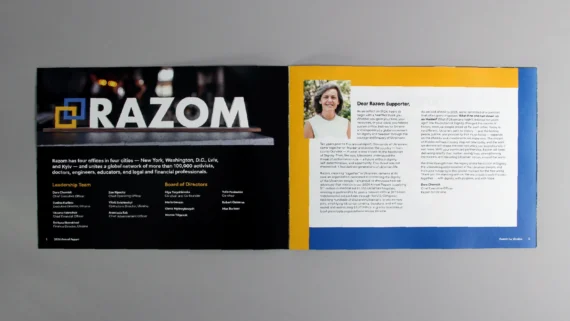
Razom is a global network bringing humanitarian relief, health care, education and advocacy to Ukraine and its people. Trillion created an impact report that impressively relays the huge scope of Razom’s endeavors through clean design, typography, branded colors and numerous vivid photos.
Annual Report Planning That Makes Storytelling and Design Work Together
A strong annual report starts long before design begins. The planning phase should define the primary narrative, identify the outcomes that matter most to donors, and gather the stories and visuals that support that narrative.
Photography is one of the most powerful tools nonprofits can utilize. Knowing how to plan a photo shoot for an annual report helps ensure you capture real moments that reflect your mission, rather than relying on stock imagery or last-minute photo gathering. Strong photography makes an impact that is human and credible.
Storytelling is equally important. Report content becomes dramatically more compelling when it includes real voices and lived experiences. That is why collecting donor stories and mission stories is so valuable. These stories give donors context for why their giving matters and reinforce that support is part of something bigger than a single gift.
Balancing Last Year’s Impact with Next Year’s Strategy
While an annual report evaluates what has already been achieved, it also serves as a critical tool to pitch where an organization is headed next. Donors look to back resilient, proactive teams that know how to navigate changing economic and cultural environments. One of the most effective ways to demonstrate forward-looking leadership in fundraising collateral is by aligning upcoming campaigns with major societal milestones. For a deeper look at how to position an organization during massive civic moments, read the strategic guide on America Turns 250: Marketing Strategies to Capitalize on Cultural Moments.

Trillion helped tell the Newark Downtown District’s story of impact through the lives of important creators and changemakers in the city.
Using Data, Infographics, and Visual Hierarchy to Make Impact Easy to Understand
Annual reports often struggle when they try to communicate too much data in dense blocks of text. Visual communication solves that problem, and infographics are one of the best tools for translating results into clarity.
A practical starting point is understanding what an infographic is and what it can do to help tell a story. From there, nonprofits can incorporate visual storytelling techniques such as those outlined in how to use infographics as fundraising tools. When done well, infographics help donors quickly grasp scale, progress, and outcomes without feeling overwhelmed.
This approach also improves scannability. A report that is easy to skim is more likely to be read and shared, especially by board members, sponsors, and supporters who are busy and consuming content in short bursts.
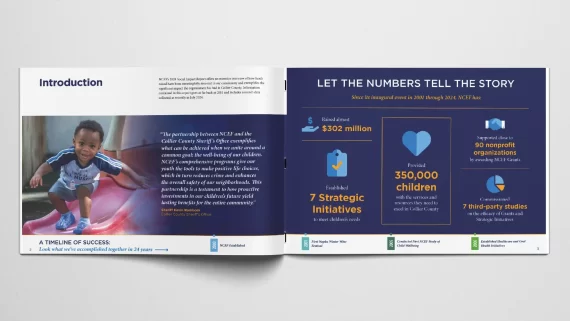
Stewardship Reports That Strengthen Donor Retention and Confidence
Annual reports can serve many audiences, but stewardship reporting is especially important for maintaining long-term donor trust. That focus matters more as the donor base shifts. Individual giving fell from 66 percent of all U.S. giving in 2024 to 64 percent in 2025, so holding on to existing supporters and showing them clearly how their gifts were used is now central to sustainable fundraising. Stewardship reports are designed to reinforce accountability, demonstrate responsible use of funds, and show how supporters are part of measurable progress.
Examples like YMCA stewardship report design highlight how strong reporting can support donor confidence and reinforce credibility with key stakeholders. Stewardship reports work best when they feel thoughtful and intentional, not templated. They should reflect the organization’s voice, brand, and mission, while presenting results in a clear, organized way.
Fundraising Appeals That Pair Strong Design With Donor Psychology
Annual report communications often set the stage for fundraising appeals, but appeals require a different kind of precision. They need urgency, clarity, and an ask structure that makes giving feel purposeful.
Seasonal appeals provide an opportunity to re-engage supporters in new ways, and spring fundraising appeal design ideas can help teams refresh their creative approach after year-end giving. The goal is to make the appeal feel timely, mission-aligned, and easy to respond to.
Appeals are most effective when they follow a clear structure and support a consistent donor journey. Understanding the elements of an effective and successful annual appeal campaign helps ensure that design, messaging, and response mechanisms are aligned, whether the appeal is print-first, digital-first, or hybrid.
For education-focused organizations, annual fund campaigns often have unique stakeholder groups and motivations. Creative approaches outlined in fundraising for education can help schools and education nonprofits connect the annual fund to outcomes in a way that resonates with parents, alumni, and community supporters.
Building Multi-Channel Fundraising Campaigns That Work as One System
The strongest nonprofits do not rely on one channel. They connect print, email, web, social, and events so that donors encounter consistent messages across multiple touchpoints.
A practical roadmap is using a multi-channel fundraising approach that coordinates creative across channels while reinforcing a single narrative. Many nonprofits are also moving toward end-of-year systems that integrate every touchpoint into a cohesive donor journey, which is why an omnichannel end-of-year fundraising strategy can be so valuable.
Email remains essential in this mix, particularly for segmentation, retention, and timely calls to action. Strengthening results often starts with using email marketing to help non-profit fundraising, especially when email creative aligns with the look and messaging of print and web assets.
Direct Mail and Print Collateral That Increase Response and Reinforce Credibility
Print continues to play a meaningful role in fundraising, particularly for major donors, older supporters, and formal communications like annual reports and appeal packages.
Many nonprofits underestimate how much response is influenced by design, words and structure. Learning from practical direct mail design tips can help teams improve readability, hierarchy, and emotional resonance.
Distribution strategy matters, too. For some organizations, Every Door Direct Mail can support community awareness campaigns or event promotion, especially when combined with clear next steps and an easy response path.
Cost efficiency is a real constraint for most nonprofits. Even small operational improvements, like getting a USPS Nonprofit Postage Authorization Number, can unlock meaningful savings by enabling you to use a postage-saving nonprofit indicia. Mail strategy becomes more sustainable when teams understand how indicia reduces postage costs, especially for recurring appeal mailings or large-scale donor communications. The savings can then be reinvested in creative, list growth, or more frequent donor touchpoints.
Print also remains central because print design is important for non-profit fundraising, especially when the goal is to signal professionalism and permanence.
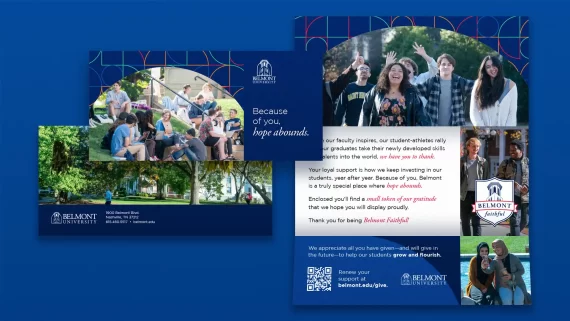
Trillion’s design for Belmont University’s alumni appeal evoked a sense of warmth and timelessness, reminding alumni that they are part of a larger story.
Personalized Fundraising Collateral That Improves Relevance and Response
As donors expect more relevance and personalization, many nonprofits are increasing their sophistication in how they tailor materials and segment their donor lists. Personalization is not only about using someone’s name. It includes segmenting messaging, tailoring asks, and matching stories to donor interests.
Using variable data fundraising is a powerful way to create personalized mailings and fundraising packages. By connecting your printed mailers to your CRM data, you can automatically customize individual donor names, specific ask amounts, and relevant impact stories.
Modern fundraising systems can even connect these physical print pieces with digital actions. For example, if a donor visits a specific campaign page on your website, your system can automatically mail them a tailored print brochure featuring that exact program within days.
When done thoughtfully, variable data makes donors feel truly seen and valued. Delivering the right story to the right person at the right time drastically increases your response rates and improves retention.
At the same time, internal teams often look for tools that help them move faster. Many organizations are experimenting with accessible platforms, and understanding how fundraising teams are using Canva can help nonprofits decide where templates make sense and where professional design is still essential for high-stakes materials like annual reports, major donor packages, and campaign branding.
Event Creative and Gala Collateral That Supports Fundraising Goals
Events are not just logistics. They are fundraising experiences, and branding influences attendance, perceived value, and donor excitement. A strong system includes event touchpoints that match the organization’s identity and reinforce the same campaign narrative donors see in appeals and reports.
Foundational planning guidance, like successful event branding design, helps teams approach event collateral as a cohesive suite rather than a collection of one-off items. For galas, having the right pieces designed and coordinated can have a meaningful impact on donor perception and participation. A practical reference is gala branding items you need designed, which helps nonprofits plan everything from invitations to programs, signage, and donor-facing materials.

Trillion elevated the overall event experience with branding at every touchpoint, from the intricately cut butterfly invitation to the typography, color palette, window clings, signage, tabletop centerpieces, posters, and main stage backgrounds.
Events also require flexibility in changing conditions. When in-person events shift, strong creativity and communication can preserve momentum, as shown by this example of a hospital foundation gala pivot that maintained donor engagement during disruption.
And for high-volume giving moments, the creative challenge is real. Recognizing and planning for Giving Tuesday fatigue helps nonprofits refresh messaging and design so donors stay engaged instead of tuning out.
Awards and Recognition That Signal Credibility to Donors and Stakeholders
Donors often evaluate not only the mission, but the professionalism and quality of how an organization presents itself. Well-executed annual reports and fundraising collateral do more than look good. They signal competence, planning, and trustworthiness.
Recognition, such as a GDUSA award for annual report design, can be a credibility indicator, especially when the report is used in donor meetings or shared with sponsors and institutional partners. Broader recognition, such as earning gold in the Educational Advertising Awards or winning first place at the Jersey Awards, supports the case that the organization’s communications are being built to a professional standard.
Digital presence matters too. Even when the annual report is print-first, the web experience influences donor confidence. Staying aligned with web design trends for not-for-profit fundraising helps ensure the donor journey is consistent when supporters move from print to web to donation.
FAQs
What are the best practices for nonprofit fundraising collateral?
Strong fundraising collateral leads with donor impact rather than administration, uses real photography and infographics instead of dense tables, and keeps financials transparent but simple. The most effective teams carry one visual system across print, email, web, and events, so the annual report, the appeal, and event materials all reinforce a single campaign narrative. Design for mobile and for accessibility, and make the next step, usually giving, easy to find and act on.
What is the difference between an annual report and an impact report?
Traditional annual reports focus primarily on retrospective financial compliance and internal operational updates. Impact reports focus on forward-facing donor stewardship, using data, infographics, and human stories to show the real-world changes your supporters’ dollars created.
Should a nonprofit print its annual report or make it digital-only?
A hybrid approach yields the best results. A printed, high-end, curated version is incredibly powerful for major donors, board members, and corporate sponsors, while an interactive digital version scales perfectly for broad community distribution and email marketing campaigns.
Do donors actually read traditional, multi-page PDF annual reports anymore?
Traditional, text heavy PDFs are seeing a drop in engagement as younger generations of donors step up their giving. Modern supporters prefer digital, interactive storytelling, bite sized metrics, and real photography over dense financial tables. Shifting toward an online microsite or a highly visual summary allows an organization to track reader engagement, feature video impact stories, and embed direct, mobile friendly donation links right into the report.
How much financial detail needs to be included in an annual report to satisfy donors?
Donors want financial transparency without being overwhelmed by a full audit spreadsheet. High-level summaries, covering the operational budget, fundraising revenue streams, and direct program expenses, are best presented through clean charts, tables, or infographics. The key is pairing these visuals with a straightforward narrative explaining exactly how those funds were deployed to achieve the stated outcomes, which builds immense trust in a volatile funding climate.
How can fundraising collateral be designed to appeal to both older major donors and younger supporters?
A multigenerational donor base requires a multi-channel approach. While Baby Boomers still represent a massive share of giving and often appreciate polished print collateral or direct mail, Millennials and Gen Z heavily research organizations online and prefer digital-first interactions via smartphone. Designing modular assets allows an organization to print a high-end, high-impact condensed report for major donors while simultaneously launching an interactive digital version optimized for web and social channels.
What to Look for in a Nonprofit Annual Report Designer
The right partner does more than lay out pages. Look for a team that starts with your story and your data, not a template, and that can shape financials into clear visuals a donor will trust. Ask to see nonprofit annual report work specifically, since fundraising design has its own rules around tone, transparency, and the ask. And look for a partner who can carry one visual system across print, email, and web, so your report, appeals, and event materials feel like one organization rather than three.
Partner with Trillion for Annual Reports and Fundraising Collateral That Drive Results
For nonprofits, annual reports, appeals, and fundraising collateral should not feel like disconnected projects. They should work together to build trust, support donor retention, and strengthen campaign performance across the year.
Trillion helps nonprofits plan and execute annual reports, impact reports, stewardship materials, appeal campaigns, direct mail, event collateral, and multi-channel fundraising creative with a consistent strategy and a high standard of design. If your organization is preparing for an annual report, looking to strengthen fundraising communications, or trying to connect print, email, and web into a more cohesive donor experience, Trillion can help you build a system that reflects your mission and supports your goals.
If you would like to talk through your upcoming reporting and fundraising needs, we’d love to help! Call us at 908-219-4703 or contact us for a consultation and explore what a tailored approach could look like for your organization.