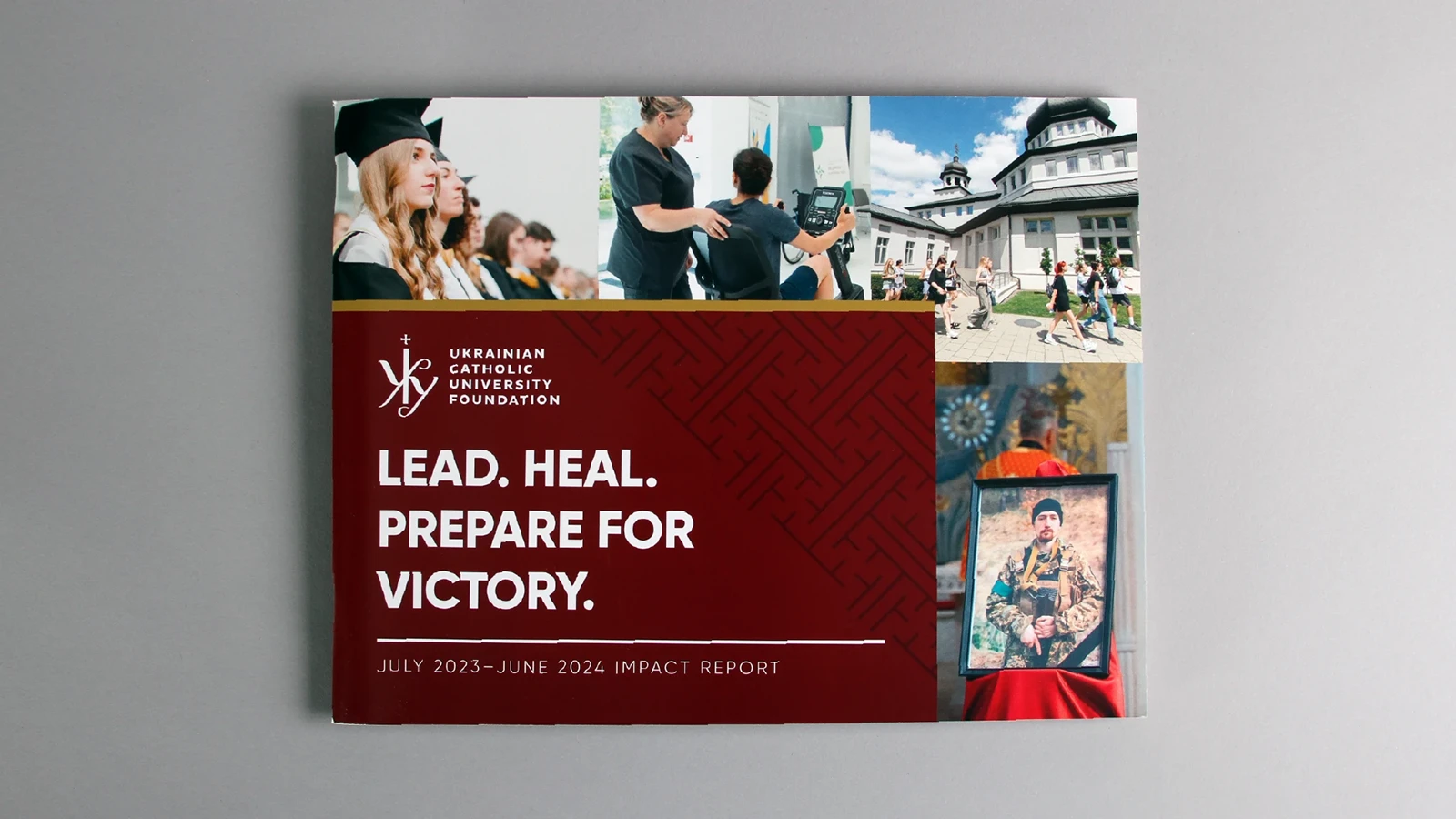
 The Tech Interactive End of Year Appeal




A strategic framework for building brand clarity, inspiring support, and strengthening community ties.
Why Communication Strengthens Your Nonprofit Mission
Every nonprofit exists to create change. Whether you’re providing mental health support, advancing education, or nurturing the performing arts, your mission only reaches its full potential when people understand it, believe in it, and choose to support it.
Communication is the bridge between your work and the community you serve. It’s how you translate impact into inspiration, data into stories, and programs into lasting relationships. When done well, it builds trust, attracts resources, and turns passive observers into active supporters.
How to Prevent Donor Fatigue
The organizations that thrive aren’t necessarily those with the largest budgets or the most staff. They’re the ones that communicate with clarity, consistency, and purpose. They understand that every email, event invitation, social post, and impact report is an opportunity to deepen connection and demonstrate efficacy toward their mission.
Donor fatigue can occur when supporters get too many generic, constant requests for money. Nonprofits need a relationship-first approach that integrates regular asks and appeals with other communications, such as newsletters, volunteer opportunities, and impact reports. Give your donors meaningful, non-transactional communiques, like a thoughtfully designed annual impact update or a personalized thank-you, in between asking for gifts. Prioritize gathering first-party CRM data, information you collect directly from your audience with their consent and knowledge, such as email signups, website visits or donations. Using first-party CRM data to share tailored stories respects your donors’ time, builds trust, and protects your long-term fundraising goals.
This intentionality applies whether you’re creating marketing campaigns to promote your annual gala or developing your year-round communication strategy. Your communications should reflect the seriousness of your mission while remaining accessible and human.

Trillion’s branding for Cooke School and Institute’s galas have resulted in sold-out events and record-breaking donations.
Understanding Donors, Sponsors, and Community Stakeholders
Before you craft a single message, you need to know who you’re speaking to. Nonprofits often serve multiple audiences simultaneously, each with different motivations, questions, and preferences.
Donors want to know that their contributions matter. They’re looking for transparency, impact metrics, and emotional connection to your cause. Some give out of personal experience, others from a sense of duty or values alignment.
Sponsors and corporate partners operate differently. They’re often motivated by brand alignment, employee engagement opportunities, and measurable community impact that reflects well on their business.
Community stakeholders, including volunteers, program participants, and local leaders, need to understand how your work affects them directly. They care about accessibility, relevance, and how they can get involved beyond writing a check.
Board members and major gift prospects require deeper strategic communication. They want to see financial health, organizational governance, and long-term vision.
The key to communicating with these groups is segmentation. A message that resonates with a monthly donor may fall flat with a corporate sponsor. There are subtle nuances in many cases and success requires tailoring your approach across multiple channels, adjusting your voice, medium, and call-to-action to the specific audience you’re addressing.
Modern Segmentation: First-Party Data & Predictive Modeling
In today’s privacy-first digital landscape, effective donor segmentation has evolved beyond sorting donors into “one-time vs. recurring” categories. With changing data privacy standards and the industry-wide shift away from third-party tracking cookies, nonprofits must rely heavily on their own first-party CRM data. Predictive modeling analyzes past email engagement, event attendance, and volunteer history and uses an AI algorithm to predict what an individual customer is likely to do next. This approach anticipates giving behavior, so you can deliver hyper-personalized, contextually relevant donor communications that comply with user privacy requirements.
The key to communicating with these groups is segmentation. A message that resonates with a monthly donor may fall flat with a corporate sponsor. There are subtle nuances in many cases and success requires tailoring your approach across multiple channels, adjusting your voice, medium, and call-to-action to the specific audience you’re addressing.
Defining Your Nonprofit Message, Purpose, and Core Values
Clarity starts with knowing exactly what you stand for and how you articulate it. Your message isn’t just what you do, it’s why you do it and what makes your approach unique.
Start by answering three fundamental questions:
What problem are you solving? Be specific. “Helping children” is vague. “Providing literacy tutoring to K-3 students in underserved schools” is clear.
Why does your organization exist to solve it? This is your purpose, your reason for being. It should be emotionally compelling and impossible to ignore.
What values guide your work? These are your non-negotiables, the principles that shape every decision from hiring to programming to partnerships.
Once you’ve defined these elements, distill them into language that’s memorable and repeatable. Your staff, board, and volunteers should be able to articulate your mission in a single sentence. This consistency builds recognition and trust.
It’s common for nonprofits to undergo periods of evolution and change as their missions evolve, leadership shifts, or programs expand. These moments are often the most important times to pay close attention to the organization’s brand, ensuring it still reflects who they are and where they’re going. It’s during these transitions that Trillion is most often approached, helping nonprofits clarify their message, strengthen their identity, and move forward with confidence.
Building a Cohesive Nonprofit Brand Identity
Brand identity is more than a logo. It’s the sum total of how your organization looks, sounds, and feels across every touchpoint. For nonprofits, a strong brand signals professionalism, trustworthiness, and impact. It can also elevate the types of sponsorships and partnerships that can have organizational impact.
Visual identity includes your logo, color palette, typography, photography style, and graphic elements. These should be documented in a style guide and applied consistently, whether you’re designing a direct mail piece, updating your website, or creating social media graphics.
Voice and tone define how you communicate. Are you formal or conversational? Urgent or hopeful? Data-driven or story-centered? The best nonprofit voices are authentic, confident, and audience-appropriate.
Messaging architecture ensures that everyone, from your executive director to your newest volunteer, can speak consistently about who you are and what you do. This includes your mission statement, tagline, elevator pitch, and key talking points.
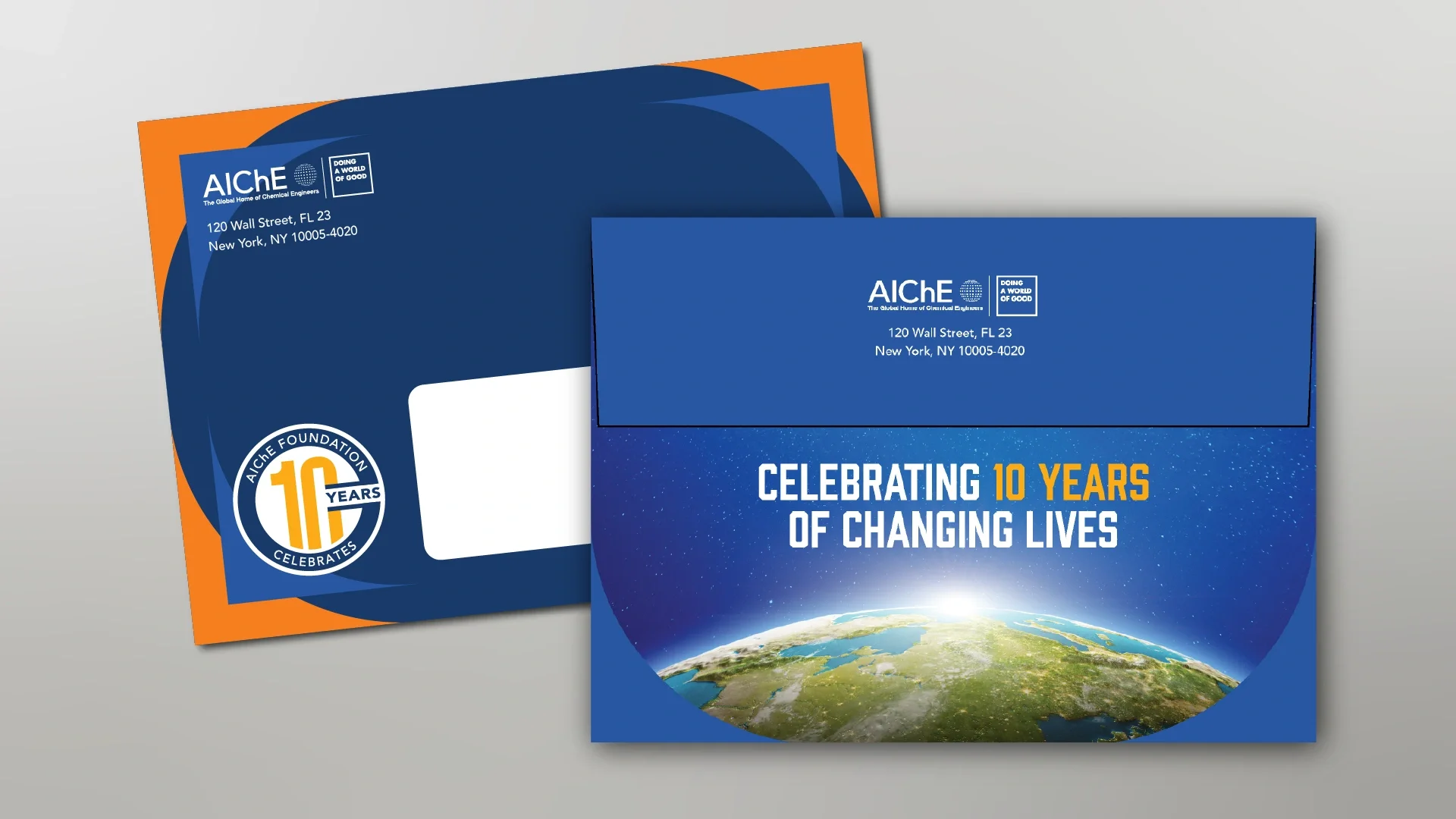
Trillion created a special visual identity for the 10-year anniversary of the American Institute of Chemical Engineers Foundation.
Strong branding becomes especially important as you scale. When your organization is recognized instantly by your colors, your logo, or your communication style, you’ve achieved something powerful: brand equity that translates to credibility. Building this kind of visual consistency takes intention but pays dividends in recognition and trust.
One often-overlooked element is print design. While digital channels dominate, printed materials still convey permanence and importance in ways that emails cannot.
Creating Annual Reports and Impact Updates that Drive Results
Annual reports are more than compliance documents. They’re strategic communications tools that demonstrate accountability, celebrate progress, and inspire continued support.
The most effective reports balance transparency with storytelling. Yes, stakeholders want to see financial data and program metrics. But they also want to understand what those numbers mean in human terms.
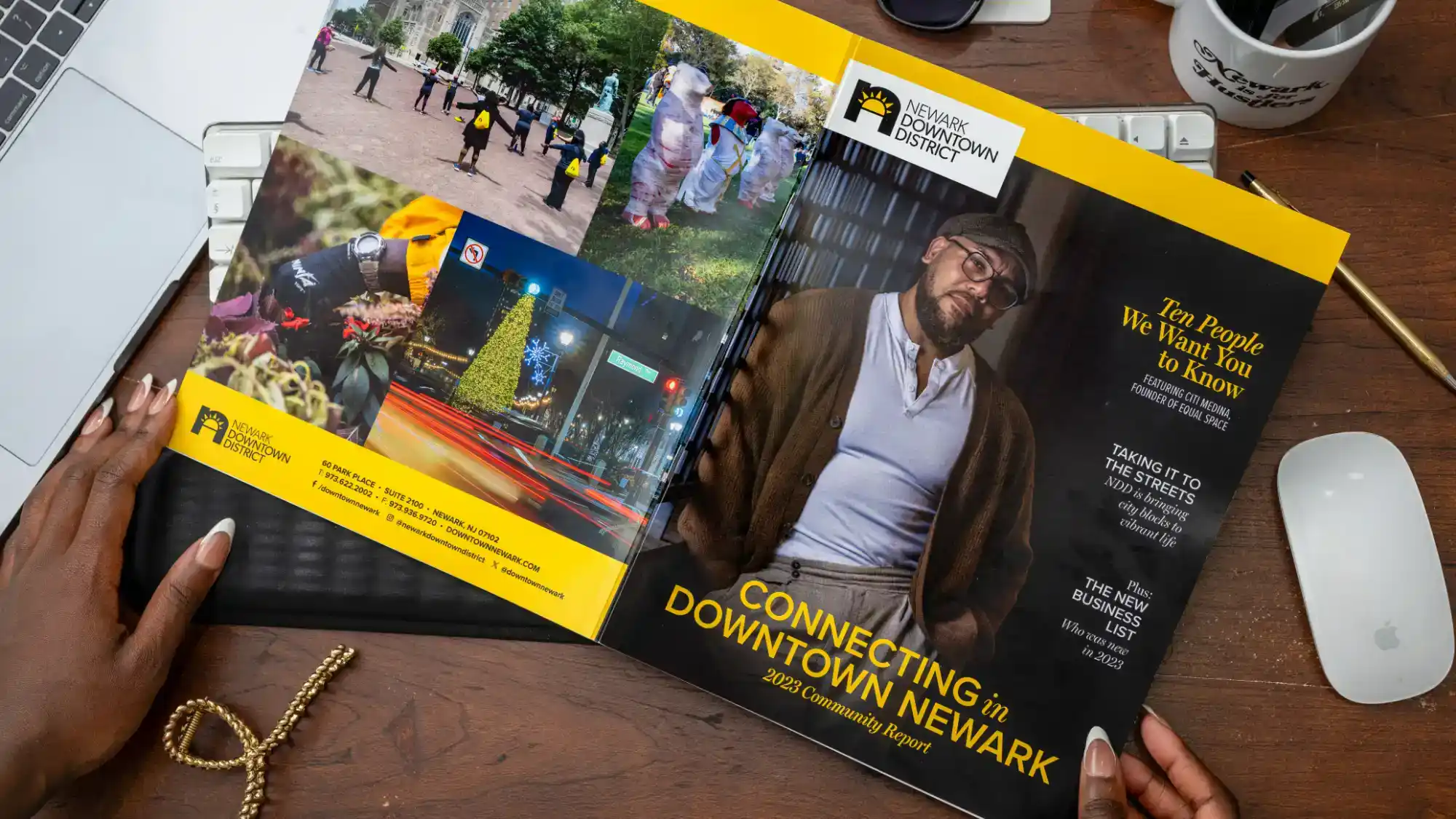
Trillion worked with Newark Downtown District to create an Annual Report that used a magazine-style format to tell the story of a city in transformation.
Structure your report around impact, not organizational structure. Instead of chapters for “Programs,” “Development,” and “Operations,” organize around the problems you’re solving: “Ending Hunger in Our Community,” “Building Economic Opportunity,” “Protecting Natural Resources.”
Use visuals strategically. Infographics can make complex data accessible. Photos should show real people experiencing real impact, not staged handshake ceremonies. Testimonials or quotes from participants, donors, and partners add authenticity and voice.
Modern donors want to see change, not just activity. This is why many organizations are shifting toward impact-focused reporting that emphasizes outcomes over outputs.
Consider format carefully. A printed report carries weight and can be shared in meetings, while a digital version allows for interactive elements, video testimonials, and easy distribution. Many organizations now create both, with the print version being more curated and the digital version offering deeper data.
Fundraising Campaign Strategies that Inspire Donor Participation
Successful fundraising campaigns do more than ask for money. They invite people into a story where they play a meaningful role. The best campaigns create urgency, demonstrate impact, and make participation feel essential.
Year-end giving campaigns remain the most important fundraising period for most nonprofits, with nearly a third of annual donations happening in December. Success requires emotional storytelling, clear calls-to-action, and multiple touchpoints across channels. The way you craft your email appeals can make the difference between meeting and missing your goals.
Spring fundraising appeals offer opportunities to re-engage donors who gave at year-end and to welcome new supporters. Fresh, seasonally relevant design approaches can help your campaign stand out in mailboxes and inboxes.
Capital campaigns allow donors to be a part of transformational change: the construction of a new facility or the initiation of a new outreach program. Successful capital campaigns come in all shapes and sizes, but there are several factors that will be invaluable, including a tagline, special branding and a case for support brochure.

Trillion branded the “Opening the Gates” capital campaign by developing a logo that reflected the campaign’s name and Temple’s logo. The case for support brochure featured community photos and renderings supplied by the architect to demonstrate Temple Shalom’s vision for its future.
Peer-to-peer campaigns leverage your existing supporters to expand reach. Whether it’s a walk-a-thon, giving day, or birthday fundraiser, these campaigns turn participants into ambassadors.
Successful campaigns share common elements:
- A compelling, specific goal (not just “support our work”)
- A clear deadline that creates urgency
- Multiple ways to participate beyond giving
- Regular updates showing progress toward the goal
- Authentic storytelling featuring real people and real outcomes
Leveraging Cultural Moments to Drive Engagement
Building a sustainable donor communication plan requires looking beyond internal updates and connecting with the broader cultural conversations your audience cares about. Major civic milestones offer an unprecedented opportunity to elevate a mission and capture renewed donor attention. For a strategic breakdown on how to authentically align fundraising messages with historic national, local or cultural moments, read the guide on America Turns 250: Marketing Strategies to Capitalize on Cultural Moments.
Email remains one of the most cost-effective channels for reaching supporters. The key is segmentation and personalization. A monthly donor should receive different messaging than a one-time giver. Strategic email marketing helps you maintain those relationships year-round.
Even small teams can create professional-looking campaign materials. Many organizations have found success using accessible design tools to produce quality graphics without large budgets. Software like Canva can allow efficient customization of materials too.
And while social media gets attention, consistency matters more than volume. Even if resources are limited, maintaining an active presence keeps your organization visible and builds community.
Strategic Print Marketing for Nonprofits in a Digital Age
Digital communication is fast and cost-effective, but print still has a place in the nonprofit toolkit. The question isn’t whether to use print, but when and how to use it strategically.
Print excels at conveying importance. An invitation to a major donor event carries more weight when it arrives by mail. An impact report feels more substantial in physical form. A thank-you note handwritten on branded stationery creates a personal connection that an email cannot match.
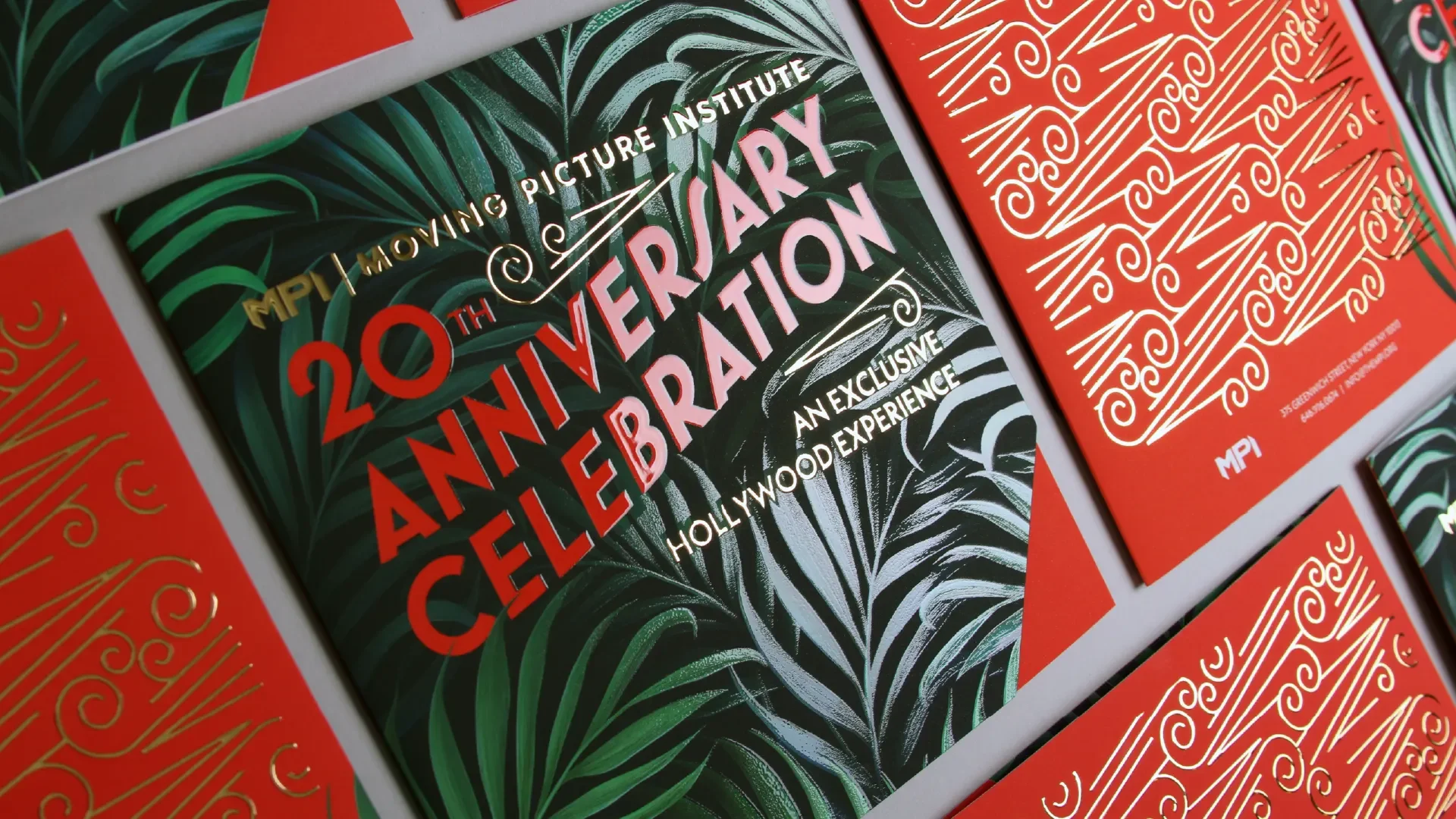
For The Moving Picture Institute, Trillion invoked the glamour of Hollywood with a green palm motif contrasted by bright red coloring, bold typography, matte soft touch coating and a high shine, raised-gold polymer that sparkles in the light. The delivery, the size, the design and even the extraordinary finishings were created to stand out and grab the attention of donors and prospective attendees.
Print reaches audiences that digital misses. Many older donors prefer mail. Some community members lack reliable internet access. Print materials at events provide tangible takeaways that people can share.
Print supports longer engagement. People skim emails in seconds, but they spend time with well-designed printed pieces. A thoughtfully crafted brochure can sit on a desk for weeks, serving as a repeated reminder of your mission.
For major events, having all the right materials designed and printed signals professionalism and attention to detail. This includes business cards, letterhead, event signage, programs, and other collateral.
The key is integration. Print shouldn’t exist in isolation but as part of a coordinated strategy. A mailed invitation might include a QR code linking to an event page. A printed annual report might drive people to an online resource hub. Visual tools like infographics work effectively in both printed materials and digital channels.
Designing Nonprofit Websites That Convert Visitors Into Supporters
Your website is often the first impression someone has of your organization. In order to get visitors to convert, the site needs to capture attention, communicate instantly what you do, why you matter, and how someone can get involved.
The most effective nonprofit websites prioritize clarity over cleverness. Visitors should be able to answer three questions within seconds of landing on your homepage:
- What does this organization do?
- Why should I care?
- How can I help or participate?
Navigation should be intuitive. Common elements include About, Programs/Impact, Get Involved, Donate, News/Blog, and Contact. Avoid jargon in menu labels. “Stewardship” may have internal meaning, but “Our Impact” communicates more clearly.
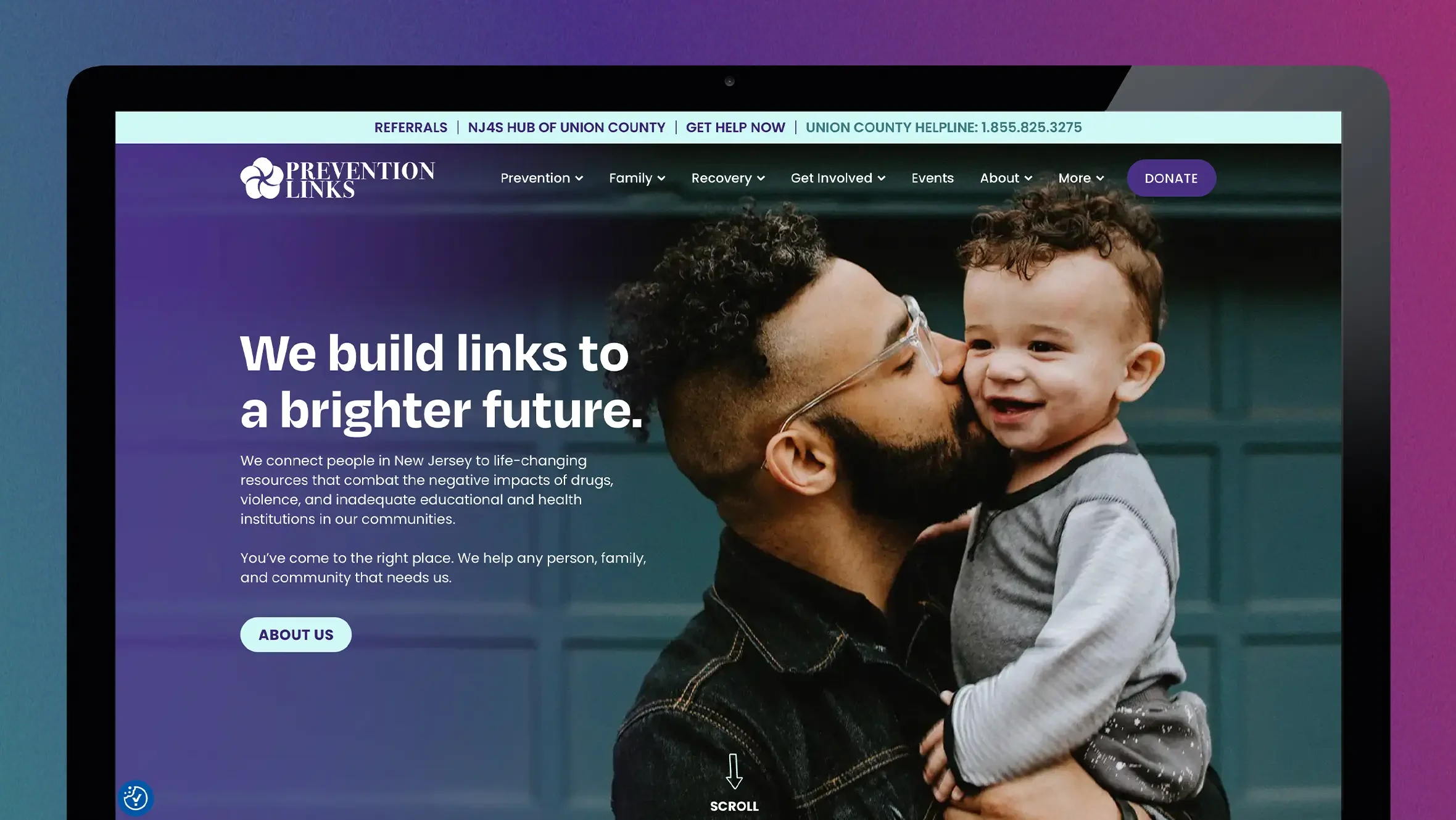
For Prevention Links, Trillion redesigned the website to prioritize clarity, intuitive navigation, and clear calls to action, helping visitors quickly understand the mission and find meaningful ways to get involved.
The donate button should be prominent on every page. Don’t make people hunt for ways to give. Many organizations use a sticky header or floating button to keep donations accessible.
Mobile optimization is non-negotiable. More than half of web traffic now comes from mobile devices, so your site must load quickly and function seamlessly on phones and tablets. Google uses mobile-first indexing, meaning mobile performance directly affects search visibility. Slow load times, layout shifts, or poor usability can hurt Core Web Vitals scores, impacting both conversions and rankings.
Content should be scannable. Use headings, short paragraphs, bullet points, and white space. Most visitors won’t read every word; they’ll skim for relevance. Scannability is even more crucial on mobile devices.
Before undertaking a website redesign, hosting a UX workshop can help align your team and ensure that your digital presence reflects organizational priorities.
Include clear calls-to-action throughout. Not everyone is ready to donate immediately, so offer multiple entry points: sign up for your newsletter, follow on social media, attend an event, volunteer, or download a resource.
Testimonials, impact stories, and data should be woven throughout the site, not siloed on a single page. Show impact everywhere.
Year-Round Donor Engagement and Retention Strategies
Donor retention is more cost-effective than donor acquisition, yet many nonprofits invest heavily in attracting new supporters while neglecting existing ones. The organizations that thrive understand that engagement is a year-round commitment.
The math behind retention has never been clearer. Charitable giving rose about 5 percent in 2025, its strongest growth in five years, yet the number of donors fell roughly 3.6 percent. The sector is raising more money from fewer people, which makes turning a first gift into a second the most valuable thing most nonprofits can do. That happens through consistent, genuine communication all year, not another year-end ask.
Thank donors promptly and meaningfully. Receipts are required, but gratitude shouldn’t feel transactional. A personal note, a phone call from a board member, or a video message from someone impacted by their gift can transform a one-time supporter into a long-term donor.
Provide regular updates on impact. Don’t wait until the next appeal to communicate. Share stories, milestones, and challenges throughout the year. Newsletters, social media, and email updates keep your mission top-of-mind.
Invite participation beyond giving. Donors who volunteer, attend events, or advocate for your cause develop deeper connections than those who only write checks. Create opportunities for involvement at multiple levels and foster these valuable relationships.
Segment communications based on donor behavior. A major donor should receive different stewardship than someone who gave $25 online. Use your CRM to track giving history, interests, and engagement, then tailor communications accordingly.
Modern technology allows you to personalize mailings at scale, using donor data to customize everything from the greeting to the ask amount to the impact story featured.
Create a donor journey map. Plot out every touchpoint from the first gift through multi-year retention. Where are the gaps? Where might someone disengage? Proactive communication at critical moments increases lifetime value.
Remember that engagement isn’t just about extracting more donations. It’s about building authentic relationships with people who care about your mission. When supporters feel connected, informed, and appreciated, giving becomes a natural expression of partnership.
Measuring Nonprofit Marketing and Communication Performance
What you can’t measure, you can’t improve. Effective nonprofits track communication performance to understand what resonates, what falls flat, and where to invest resources.
For email campaigns, monitor open rates, click-through rates, and conversion rates. Email open rates once hovered around 25 to 30 percent, but privacy features that auto-load images have made open rate an unreliable benchmark. Watch click-throughs, replies, and gifts instead, since those reflect real donor engagement. Test subject lines, send times, and email length to optimize performance.
For direct mail, track response rates, average gift size, and cost per dollar raised. Include unique URLs or codes to measure how many people move from print to digital.
For social media, engagement metrics (likes, comments, shares) matter more than follower count. A smaller, engaged audience is more valuable than a large, passive one. Track which content types and topics generate the most interaction.
For websites, use Google Analytics to monitor traffic sources, page views, bounce rates, and conversion paths. Which pages lead people to donate? Where do visitors drop off? This data should inform content and design decisions.
For fundraising campaigns, measure not just dollars raised but also donor retention, upgrade rates, and cost of acquisition. Using the right measurement tools helps you establish benchmarks and track progress over time.
Demystifying Digital Ad Performance and Data
Launching digital advertising campaigns is only half the battle; tracking their direct impact on donor acquisition is what ensures long-term budget sustainability. Nonprofit leadership and boards look for clear proof of return on investment, which requires a firm grasp of conversion tracking and campaign analytics.
Beyond quantitative metrics, collect qualitative feedback. Survey donors about why they gave, what communications they find valuable, and what would deepen their engagement. Host focus groups with different stakeholder segments to understand perception and preferences.
Understanding what motivates your specific audience only comes from listening and measuring responses. This insight is crucial when developing compelling case statements for major campaigns.
Set goals tied to organizational priorities, not vanity metrics. A 5% increase in donor retention may be more valuable than a 50% increase in social media followers.
Review metrics quarterly as a team. What’s working? What needs adjustment? Use data to inform strategy, not just to report activity.
When Nonprofits Should Partner with Marketing Experts
Most nonprofits operate with limited staff and stretched budgets. The question of whether to handle communications in-house or partner with an outside agency isn’t about capability; it’s about capacity, expertise, and strategic priorities. It is often an investment to help better support the mission’s organization.
Consider external support when:
You lack in-house design or technical expertise. Hiring a full-time designer may not be feasible for a small organization, because major campaigns and brand updates require professional execution that likely extends beyond one designer.
You need strategic guidance, not just execution. Agencies bring perspective from working across multiple organizations and industries. They can identify blind spots and recommend approaches you might not have considered. Organizations that want senior marketing leadership without a full-time hire sometimes bring in an outsourced CMO or marketing team for exactly this kind of direction.
You’re launching something significant. A capital campaign, rebrand, website overhaul, or major event benefits from specialized experience. When working with limited budgets, strategic investment in external help for high-impact projects often delivers the best return.
Your team is overwhelmed. If your communications director is also your development director, program coordinator, and volunteer manager, something will slip. External partners can absorb specific projects while your team focuses on mission-critical work.
You need objectivity. Internal teams can become too close to the work. An outside perspective can challenge assumptions, identify messaging problems, and ask questions that need asking.
You’re facing a specific challenge. Whether it’s declining donor retention, low event attendance, or poor website performance, specialists can diagnose problems and implement solutions faster than trial and error.
Smart nonprofits look for ways to maximize their marketing investment, which often includes strategic outsourcing of specialized tasks rather than trying to build every capability internally.
Red flags when evaluating partners:
- Agencies that don’t ask about your mission, audience, or goals
- “One-size-fits-all” packages without customization
- Lack of nonprofit experience or case studies
- Pricing that seems too good to be true (it probably is)
- Poor communication during the sales process (it won’t improve)
The right partner feels like an extension of your team. They understand nonprofits, respect budget constraints, and care about your mission succeeding.
FAQs
What is the difference between nonprofit marketing and donor communications?
Nonprofit marketing focuses on getting people to discover your mission through broad visibility, brand awareness, and acquisition. Donor communications focus on deepening the connection with people who already support you through stewardship, retention, and relationship building.
How often should a nonprofit communicate with its donors?
There is no one-size-fits-all number, but a great rule of thumb is the 4:1 rule: provide at least four pieces of pure impact reporting, updates, or gratitude stories for every single direct financial appeal you send.
What is a good donor retention rate for a nonprofit?
Benchmarks help you set realistic goals. In the Fundraising Effectiveness Project’s most recent full-year data, overall donor retention was about 43 percent. The gap between new and repeat donors is the real story: roughly 59 percent of repeat donors gave again, compared with only about 19 percent of first-time donors. That is why a deliberate welcome and second-gift plan for new donors returns more than almost any other retention effort.
How do we talk to donors if our grant money becomes unpredictable?
When grant funding is unpredictable, communications need to show that the organization is stable and built to last. Instead of relying on a single source, fundraising materials and impact reports should plainly show a healthy mix of different income streams. Showing donors that the operation is run efficiently and proactively gives individual givers and corporate sponsors the confidence they need to keep supporting the mission when the economy shifts.
Should we use AI to write our donor communications?
Use it carefully. Most nonprofits now use AI somewhere in their work, and it is genuinely useful for donor research, first drafts, and spotting patterns in your data. Donor-facing messages are different. The appeals and thank-yous that build loyalty still land best in a real human voice, because donors can feel the difference. Let AI help you prepare and personalize, then make sure a person shapes the message your donors actually read. Transparency matters too. In a 2026 Blackbaud Institute study, 76 percent of donors said it is important that organizations disclose when and how they use AI, yet only 26 percent of organizations say they do. A brief, honest note about where AI assists and where a person leads protects the trust your communications depend on.
How should our metrics change across a multi-phase campaign?
Match the metric to the goal of each phase. In an early awareness phase, track impressions and reach to see how many people you are getting in front of. As the campaign shifts toward action, move your primary focus to sign-ups, conversions, and gifts. Impressions still get logged, but they stop being the number you judge success by. Watching only engagement metrics like shares and comments, or measuring impressions the whole way through, will overstate a campaign that is not actually driving results.
Partner with a Creative Agency That Understands Nonprofits
Working with nonprofits requires a different approach than corporate clients. The stakes are different, the constraints are real, and the measures of success extend beyond metrics to actual human impact.
At Trillion, we’ve spent years learning what makes nonprofit communications work. We understand the unique challenges you face: limited budgets, multiple stakeholders, mission-critical deadlines, and the pressure to demonstrate impact with every campaign.
We know nonprofit culture. We’ve worked with organizations across sectors, from education to healthcare to social services and performing arts. We understand budget approval processes, board dynamics, and the reality of staff wearing multiple hats. We work within these constraints productively, not in spite of them.
Our process is collaborative and strategic. Before we design anything, we listen. We ask about your mission, your audience, your challenges, and your goals. We know that planning ahead prevents burnout, and we help you build communication calendars that avoid last-minute scrambles.
We measure what matters. Beautiful design is important, but results are what count. We track campaign performance, analyze donor response, and continuously refine our approach based on what works for your specific audience.
We bring specialized expertise. From designing invitations that increase attendance to implementing current web design trends, we stay current on what’s working in nonprofit communications. We bring that knowledge to every project.
We respect your budget. We know every dollar matters. We’ll help you prioritize, phase projects when necessary, and identify where investment will have the greatest impact. We’re transparent about costs and committed to delivering value.
We handle the details others overlook. Need help navigating nonprofit postal rates? We’ve got you covered. These operational foundations enable sustainable communication programs, and we make sure they’re in place.
Our work drives results. We’ve helped nonprofits increase donor retention, boost event attendance, improve brand recognition, and raise millions in support. We don’t just create pretty designs; we build communication systems that strengthen organizations and advance missions.
Whether you need a complete rebrand, a website redesign, a major campaign, or ongoing creative support, we’re ready to be your partner. We become an extension of your team, someone you can rely on for strategic thinking, creative execution, and the kind of attention to detail that makes nonprofits stand out.
Your mission deserves communications that match its importance. Your donors deserve messaging that honors their commitment. Your community deserves to know about the work you’re doing.
Ready to elevate your nonprofit’s communications? Contact Trillion today to discuss how we can help you build stronger connections, inspire deeper support, and communicate your impact with clarity and confidence. Let’s create something meaningful together.